The brain, which controls human life, thought, and memory, is composed of approximately 20% neurons and approximately 80% glial cells, which maintain and maintain it. Over the past decade, the role and function of glial cells have begun to be elucidated. It is believed that the human brain learns the knowledge necessary for life and survival by the age of two, and that human thought processes are fully developed by the age of 12. It was previously believed that the brain’s neural circuits stopped growing in adulthood, but elucidating the function of glial cells has revealed that glial cells maintain and renew neurons daily, replacing and renewing neurons, removing unused neural circuits, and creating new ones. It is now known that the neural circuits in the human brain are maintained and managed by glial cells and grow through new experiences and learning.
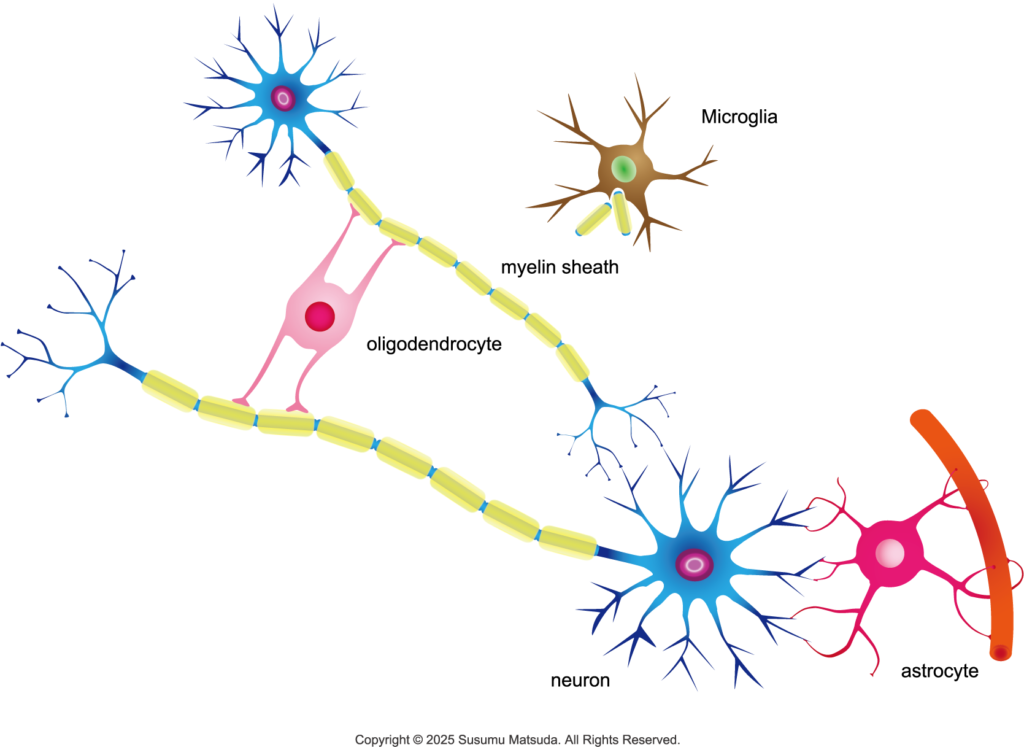
It is known that neurons are activated when we feel fear, and new neurons are generated when we experience the joy of living. Therefore, I believe that both moderate negative stress and positive stress, which brings about the joy of living, are necessary for the brain. Glial cells, which make up 80% of the brain, are made up of three types of cells: astrocytes (which supply nutrients to and stabilize neurons), oligodendrocytes (which help improve the speed of nerve conduction), and microglia (which eliminate unnecessary neurons). Glial cells are active while we sleep, maintaining and managing neurons. They are also known to be directly and deeply involved in brain functions such as neurotransmission and blood flow control. Brain cells are refreshed by sleep, and function effectively when they get around seven hours of sleep. Reducing sleep time causes brain cells to continue to function without being fully refreshed, which can lead to deterioration and poor brain function.